

Last Updated: November 7, 2026
Quick Summary
Yes, you can keep gazebo fabric clean and mold-free with a simple routine. Clean it gently with mild soap, warm water and a soft brush every month, and let it dry completely before folding or storing it. Prevent mold by keeping the canopy dry between uses.
- Use mild dish soap, warm water and a soft brush, then rinse with low-pressure water.
- Avoid bleach, strong degreasers and abrasive scrubbers, which can break down the protective coating.
- Clean monthly during the active season and do a full cleaning in spring and fall.
- Never pack away a damp canopy, since trapped moisture is the main cause of mold and mildew.
- Patch small tears promptly with outdoor-rated repair tape before the damage spreads.
Table of Contents
- Why Gazebo Fabric Needs Regular Care
- Tips 1-3: Clean Gazebo Fabric Gently and on a Schedule
- Tips 4-6: Handle Stains, Washing and Drying Correctly
- Tips 7-8: Prevent Mold and Mildew Before They Start
- Tips 9-10: Protect Fabric Through Winter Storage and Repairs
- Choosing a Replacement Canopy When Repair Is No Longer Worth It
- Frequently Asked Questions
Why Gazebo Fabric Needs Regular Care
Outdoor gazebo fabric takes a beating from sun, rain, pollen and wind, and most of that damage is slow and easy to miss. Good maintenance is the cheapest way to extend the life of a gazebo canopy, and the steps are simple.
Gazebo fabric is typically polyester with a protective coating, and that coating is what keeps water out and UV damage down. Dirt, mildew and grime wear that coating away over time. A regular cleaning routine protects the coating and the fabric beneath it. A few minutes of care every few weeks can help prevent the kind of damage that eventually calls for a replacement canopy.
This guide walks through 10 practical tips for maintaining outdoor gazebo fabric, from routine cleaning to winter storage and repairs. The tips are grouped so you can work through them in order or jump to the problem you are facing.
Tips 1-3: Clean Gazebo Fabric Gently and on a Schedule
Gentle cleaning does more for gazebo fabric than aggressive scrubbing. Harsh methods can strip coatings and weaken threads, so the goal is to lift dirt without damaging the material.
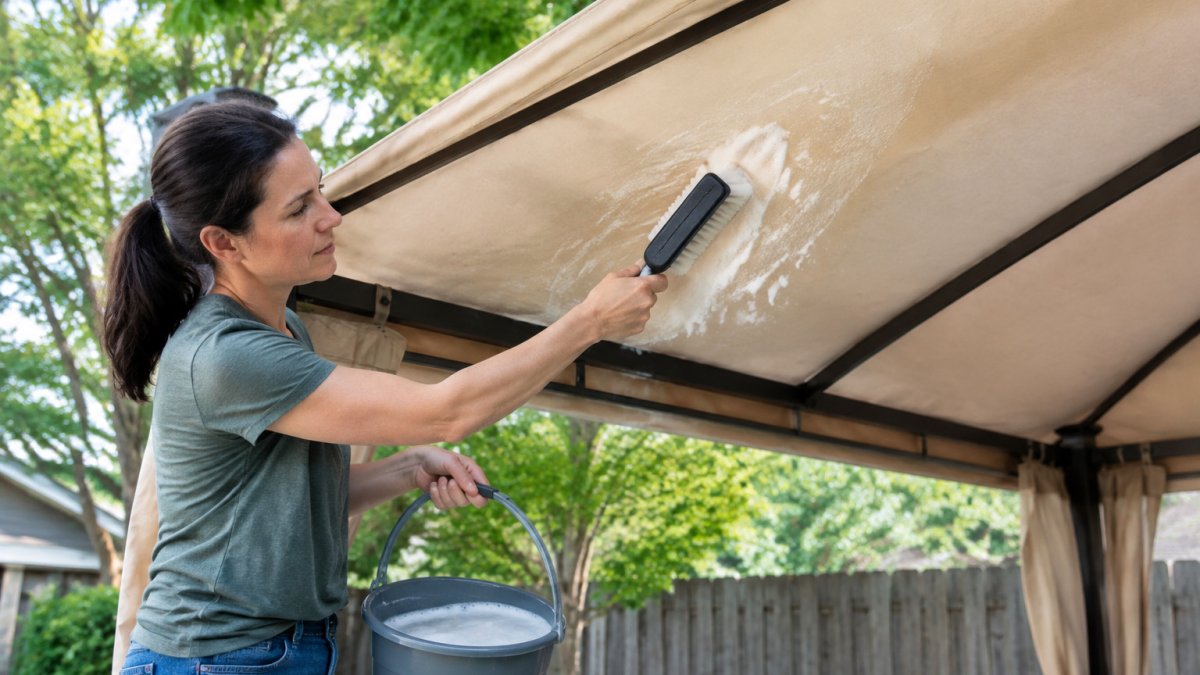
Tip 1: Use Mild Soap, Warm Water and a Soft Brush
Mix a small amount of mild dish soap into a bucket of warm water. Dip a soft brush or cloth, then work in gentle circles across the canopy. Rinse thoroughly with a garden hose on a low-pressure setting so no soap residue is left behind. Residue can attract dirt and cause streaking.
Tip 2: Avoid Harsh Chemicals and Abrasive Cleaners
Bleach, strong degreasers and abrasive scrubbers can break down the protective coating on outdoor fabric. Once the coating is damaged, water and UV penetrate more easily. Stick with mild soap and water for routine cleaning, and save stronger treatments for specific stains only after checking the manufacturer's guidance.
Tip 3: Set a Cleaning Frequency You Can Keep
A simple schedule works better than occasional deep cleans. A monthly wipe-down during the active season and a full cleaning twice a year, in spring and fall, is a practical schedule. Our guide on how to store a gazebo canopy through winter covers the off-season step that follows the fall cleaning. Frequent light cleaning keeps dirt and pollen from bonding to the fabric, which makes each session quicker.
Tips 4-6: Handle Stains, Washing and Drying Correctly
Stains and wet fabric cause most of the lasting trouble. Acting quickly and drying thoroughly prevent a small problem from becoming a permanent one.
Treat stains as soon as you notice them. Fresh bird droppings, sap and food spills are easier to lift before they dry and set. Blot the area with a damp cloth and mild soap, then rinse. Waiting lets the stain penetrate the weave.
Washing a gazebo cover in a standard washing machine is generally not recommended, because the size, weight and coating of most canopies can damage both the fabric and the machine. Hand cleaning with the method in Tip 1 is the safer choice for most owners. Check the care label or manufacturer instructions before attempting any machine wash.
Drying matters just as much as washing. Let the canopy air-dry completely in the sun and breeze before folding or storing it. Trapped moisture is the main cause of mold and mildew, so never pack away a damp canopy.
Stains and drying mistakes cause most lasting damage, so here is a quick reference for the key steps covered in this section.
| Task | Method | Key point |
|---|---|---|
| Stain removal | Blot with damp cloth and mild soap, then rinse | Act while the stain is fresh |
| Washing | Hand clean with mild soap and warm water | Machine washing is generally not recommended |
| Drying | Air-dry completely in sun and breeze | Never pack away a damp canopy |
| Rinsing | Low-pressure garden hose | Leave no soap residue |
Tips 7-8: Prevent Mold and Mildew Before They Start
Mold and mildew thrive in damp, shaded conditions, and once they stain a coated fabric the discoloration can be permanent even after the growth is killed. Prevention is far easier than removal, and removal needs to be handled carefully so the cure does not destroy the coating.
Tip 7: Keep the Canopy Dry Between Uses
Ventilation is the main defense. Where the design allows, keep the canopy open during dry weather and make sure water runs off rather than pooling on the top. Standing water is a common route to mildew growth. Pay particular attention to the underside of the canopy and the seams, where condensation collects and dries last. After rain, shake or brush off pooled water and let the fabric air out before closing the gazebo up for the day. In humid stretches, a small battery-powered fan run under the canopy for an hour after rain moves air through the weave and shortens the drying window.
Watch out: folding or zipping a canopy closed while the underside is still damp traps moisture against the fabric and is one of the most common ways mildew gets started between cleanings.
Tip 8: Clean Mildew Early With Gentle Methods
If you spot mildew, act while the spots are still surface-level. A common pattern is small black or gray speckles that smear when rubbed; once they form a ring or stain the weave, the growth has been there a while. Start with the mild soap and warm water method from Tip 1, scrub gently with a soft brush, rinse, and dry completely in the sun.
Before applying any mildew treatment to a visible area, patch test it on a hidden section such as the inside of a valance or a corner that faces away from view. Apply the product, wait the full dwell time listed on the label, rinse, and let it dry.
Watch out: chlorine bleach and strong degreasers can break down the water-repellent coating on outdoor fabric, and the damage often shows up weeks later as a patch that no longer beads water. Avoid them on the canopy even when a stain is stubborn.
For mildew that keeps returning in the same spot, the cause is usually trapped moisture rather than the cleaner. Check for sagging fabric that holds water, a torn seam that lets water into the layer, or a canopy stored damp. Treating the spot without fixing the moisture source just resets the clock.
Tips 9-10: Protect Fabric Through Winter Storage and Repairs
Winter and long periods of disuse are when many canopies are damaged, and the damage usually happens quietly: moisture trapped in a fold, rust transferring from the frame, or a small tear that grows under the weight of snow. Preparing properly helps the fabric come through the off-season intact.
Tip 9: Store the Canopy Dry and Loosely Folded
Before storage, confirm the canopy is fully dry on both faces, not just the top. The underside dries last, so flip or hang the canopy in the sun and breeze for a few hours after cleaning, then feel the seams and hems before folding. If any part feels cool or damp, give it more time.
Fold it loosely rather than tightly creasing it, and store it in a breathable bag or container in a dry location. Airtight plastic traps moisture and invites mildew. If rust has already spread across the frame, this guide on how to remove rust from a gazebo frame explains the cleanup steps.
Watch out: storing a canopy in a shed or garage that swings between damp and dry through the winter can grow mildew even when the fabric went in dry, so check the stored canopy once a month and re-dry it if condensation has formed.
Before the canopy goes into storage, do a quick end-of-season inspection: run a hand along the seams, look for thinning at the corners where the fabric rubs the frame, and check whether water still beads on the surface. A canopy that no longer beads is a candidate for re-waterproofing in spring, and a canopy with thinning corners is a candidate for reinforcement patches before the off-season.
Tip 10: Repair Small Tears Early
Small tears and loose seams are much cheaper to fix when they are caught early. Patch minor damage promptly to stop it from spreading, using a fabric patch or repair tape rated for outdoor use and matching the canopy material. Clean and dry the area before applying the patch, and press it firmly along the full edge so water cannot get under it.
Loose seams are worth restitching with UV-resistant outdoor thread if you have the tools, or taking to an upholstery shop if the seam is long or load-bearing. Watch for signs that the fabric has worn past repair: widespread thinning, multiple tears, a coating that no longer repels water across large areas, or fabric that tears easily when tugged. At that point a replacement canopy is usually the safer and more cost-effective choice than repeated patching, because a failing coating lets water into the fabric and accelerates the next failure.
Choosing a Replacement Canopy When Repair Is No Longer Worth It
Sometimes damage goes beyond repair. When tears are widespread, the coating has failed, or the canopy no longer fits the frame, a replacement is the practical choice. Measure your gazebo first so the new canopy fits the frame correctly. Our guide on how to measure a gazebo for a replacement canopy walks through the process, and this step-by-step fit guide explains how to confirm a canopy will match your frame before you buy.
If you need a direct match for a common size, the Elite Shade Titan Replacement Canopy for 12x12 Gazebo is a 500 denier RipLock option priced at $389.63. For a 10x12 frame, the Aster Outdoor Gazebo replacement canopy is listed at $219.63. Compare the fabric weight, coating and fit details on each listing before ordering.


Gazebo Parts Direct offers replacement canopies, curtains, mosquito netting and frame parts for major gazebo brands, so you may be able to find a replacement without buying a whole new structure. Confirm your model number and frame dimensions before you order.
Frequently Asked Questions
Can you leave a fabric gazebo up in the winter?
Leaving a gazebo up through winter shortens the life of its canopy. Snow loads, freeze-thaw cycles and trapped moisture can stretch seams, crack coatings and encourage mildew. If you must keep the frame in place, remove the canopy, dry it fully and store it indoors. Check the frame for rust or loose fasteners at the same time, and secure the structure against wind so it does not shift under a load of snow or ice.
Can you wash gazebo covers in a washing machine?
Most gazebo canopies should not go in a washing machine. The agitation can damage seams, grommets and water-repellent coatings, and harsh detergents strip protective finishes. Hand cleaning with mild soap, warm water and a soft brush is the safer method for most outdoor fabric. Check the manufacturer's label before doing anything else, and always let the canopy air-dry completely before reinstalling it.
How often should you clean gazebo fabric?
Light cleaning every few weeks during the outdoor season keeps dirt, pollen and bird droppings from setting into the fabric. Do a deeper cleaning twice a year, once in spring before use and once in fall before storage. Clean stains right away, since they become harder to remove the longer they sit. Gazebos in shady or damp areas may need more frequent attention to prevent mildew.
How can you prevent mold and mildew on gazebo fabric?
Mold and mildew grow where moisture stays trapped. Dry the canopy completely after rain or cleaning, avoid storing it damp, and make sure air can circulate around the frame. Clean the fabric periodically to remove food sources like dirt and organic debris. If mildew appears, treat it promptly with a diluted mild cleaning solution and a soft brush, then rinse and dry thoroughly.
