

Last Updated: October 26, 2026
Quick Summary
To store gazebo canopy winter, remove the fabric canopy from the metal frame, clean it thoroughly with mild soap, dry it completely, fold or roll it loosely, and pack it in a proper storage bag with a desiccant pack in a cool, dry, dark location away from pests and moisture.
- Remove the canopy if your area gets heavy snow, as frozen water expands inside fabric weave and tears the material.
- Clean the canopy with a soft brush and mild soap, then let it dry completely before packing to prevent mold and mildew.
- Use a replacement storage bag sized to fit the folded canopy, never garbage bags or poly tarps that trap condensation.
- Store the bag on pallets or shelves away from concrete floors and exterior walls in a space with below 50% humidity.
- Label all storage containers and photograph frame connections before disassembly to simplify spring reassembly.
Table of Contents
- Should You Remove Your Gazebo Canopy Before Winter?
- How to Clean a Gazebo Canopy Before Storage
- Drying Your Canopy Completely to Prevent Mildew
- How to Fold a Gazebo Canopy for Storage
- Using a Gazebo Canopy Storage Bag for Winter Protection
- Choosing the Right Storage Location
- Storing Curtains, Screens, and Other Fabric Elements
- Preparing Your Gazebo for Spring
- Frequently Asked Questions
Should You Remove Your Gazebo Canopy Before Winter?
The first decision when you store gazebo canopy winter is whether to disassemble your gazebo entirely or simply remove the fabric canopy. Your metal frame can stay in place through winter if it's anchored properly. The canopy itself needs protection from snow load, ice accumulation, and freezing temperatures that damage fabric.
Here's the key difference: a metal frame handles cold and moisture. Fabric does not. When water freezes inside the weave of your canopy, it expands and tears the material. Snow accumulation adds weight that stretches seams and weakens stitching.
You should remove your canopy if:
- Heavy snow is typical in your area
- Your gazebo sits in a spot where wind accelerates
- You want to avoid ice dams forming on the fabric
- The canopy shows signs of wear already
How to Clean a Gazebo Canopy Before Storage
Dust, pollen, and organic debris trap moisture. Mold and mildew grow fast in damp, dark storage spaces.
Remove Loose Debris and Dust
Start with a soft brush or cloth. Gently sweep the entire surface of the canopy to remove loose dust, leaves, and debris. Don't scrub hard, you're not trying to deep clean yet. Just clear away the surface layer.
Pay attention to seams and corners where dust collects. A soft-bristled brush works better than a stiff one.
Wash the Fabric with Mild Soap
For stubborn stains, let the soapy water sit for 5-10 minutes before wiping. Never use harsh chemicals, bleach, or pressure washers. These damage the fabric coating and weaken seams.
Drying Your Canopy Completely to Prevent Mildew
If you notice any mildew starting to form (black or green spots), wipe those areas with a cloth dampened in a vinegar-water solution (1 part vinegar to 3 parts water). Let it dry again completely before packing.
How to Fold a Gazebo Canopy for Storage
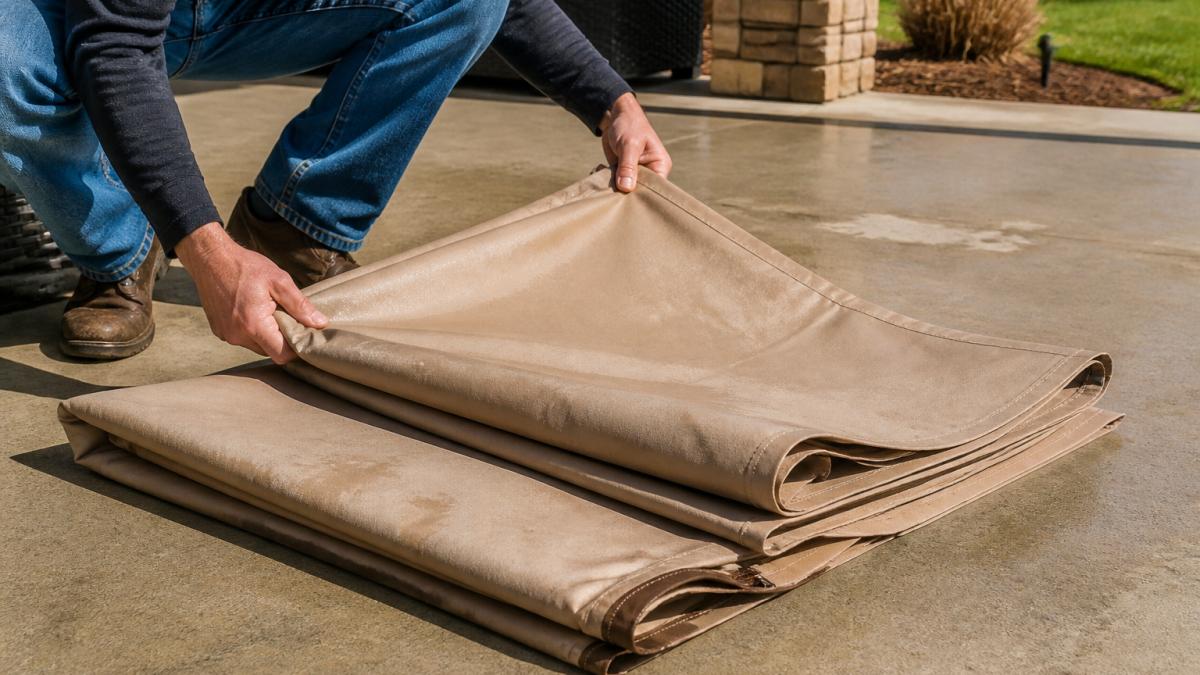
Folding properly prevents creases from becoming permanent wrinkles and makes packing easier.
Prepare Your Workspace
Make sure your hands are clean before handling the dry canopy. Any dirt or moisture transfers back to the fabric.
Fold in Sections and Stack Neatly
Once folded into a compact rectangle, roll it loosely rather than folding again. Rolling is gentler than stacking multiple folds. Secure the roll with soft fabric straps or old cloth strips, never use rubber bands or plastic ties that can mark the fabric.
Using a Gazebo Canopy Storage Bag for Winter Protection
When you store gazebo canopy winter in a storage bag, it does more than keep dust off. It isolates the canopy from rodents, insects, and the humidity swings that drive mildew. But the bag only helps if the fabric going in is clean, bone-dry, and packed correctly.
Match the Bag to the Fabric
If the original bag is lost or torn, a replacement canopy bag sized to the folded dimensions is better than a garbage bag. Poly tarps and trash bags trap condensation.
Pack to Prevent Creases and Pest Access
- Confirm the canopy is completely dry, including seams, hems, and reinforced corners.
- Fold or roll as described above, then slide the bundle into the bag without compressing it.
- Leave a small air gap at the top; do not vacuum-seal or over-compress.
- Close the bag fully. If it has only a drawstring, tie it snugly and tape the opening shut to block insects.
- Place a cedar block or a sealed desiccant pack in the bag, not touching the fabric directly.
Store Components Together but Separately
Keep the canopy bag, curtain bag, and hardware container in the same area so nothing goes missing. Label each bag with the gazebo model and the season it was stored. Photograph the frame connections and hardware layout before disassembly, and tape the photo inside the hardware container. Small parts like bolts, clips, and curtain rings belong in a sealed zip-top bag inside a rigid container, not loose in the canopy bag where they can abrade the fabric.
Choosing the Right Storage Location
Where you store the canopy matters as much as how you prepare it. You can also consider a weatherproof gazebo designed for winter to eliminate seasonal storage concerns. A dry, cool, dark, pest-free space protects the fabric; a damp basement or a shed with wild temperature swings undoes your cleaning and drying work.
Inspect the Space Before You Store
Before carrying anything in, walk the storage area and check for:
- Moisture: Look for water stains, rust on metal shelving, or a musty smell. Run a dehumidifier if the space reads above 50% relative humidity.
- Pests: Check corners, shelves, and floor edges for droppings, gnaw marks, or insect casings. Seal cracks and set traps before storing fabric.
- Light: Cover windows or choose an interior wall. UV degrades fabric even through a bag.
- Temperature stability: An attached garage or interior closet is better than an unheated shed that swings from freezing to warm.
Set Up the Storage Zone
Elevate bags off concrete floors on pallets, shelves, or a plastic riser. Concrete wicks moisture. Keep bags away from exterior walls that sweat in cold weather. If the space is humid, place a rechargeable desiccant canister nearby and refresh it monthly.
Organize Hardware and Small Parts
Label every container. Photograph frame connections before disassembly and tape the photo to the hardware box. Store bolts, clips, and curtain rings in sealed zip-top bags inside a rigid container so they do not puncture the canopy bag or get lost. A simple parts list taped inside the lid saves time in spring.
Check Periodically
U.S. Environmental Protection Agency mold guidance
Check these conditions before storing your canopy to prevent moisture, pest, and UV damage.
| Condition | What to Check | Action if Problem Found |
|---|---|---|
| Moisture | Water stains, rust, musty smell | Run dehumidifier if above 50% humidity |
| Pests | Droppings, gnaw marks, insect casings | Seal cracks and set traps |
| Light | Windows or bright areas | Cover windows or use interior wall |
| Temperature | Freezing to warm swings | Choose attached garage or interior closet |
Storing Curtains, Screens, and Other Fabric Elements
Purchase replacement curtains and sidewall sets if your existing fabric elements show wear or damage during cleaning.
Preparing Your Gazebo for Spring
When temperatures start warming and spring approaches, it's time to think about getting your gazebo ready again.
Frequently Asked Questions
Can you leave a gazebo canopy on its frame all winter?
No. Leaving your gazebo canopy on the frame through winter exposes it to heavy snow loads, ice accumulation, freezing temperatures, and constant moisture. This combination accelerates fabric deterioration, promotes mold and mildew growth, and can damage the metal frame. Removing and storing the canopy indoors protects both components and extends their lifespan significantly.
How do you prevent mold and mildew on a stored gazebo canopy?
Complete drying is essential before storage. After cleaning, air-dry your canopy fully in direct sunlight for at least 24-48 hours, or until no moisture remains. Store it in a dry, temperature-controlled space with good air circulation. Use a storage bag to keep dust and pests away, but ensure the canopy is completely dry first. Check periodically for signs of moisture or mold during winter.
Can you store a gazebo canopy while it is damp?
No. Storing a damp canopy creates an ideal environment for mold, mildew, and fabric rot. Always ensure your canopy is completely dry before placing it in a storage bag or container. If you must store it before it's fully dry, leave the storage bag open or store it loosely to allow air circulation. Moisture trapped in sealed storage will cause permanent damage.
What's the best way to store a gazebo canopy to ensure it fits properly when reassembled?
Clean and dry your canopy thoroughly, then fold it carefully in sections to avoid permanent creases. Store it in a labeled storage bag or container with your frame hardware and fasteners. Keep all parts, canopy, curtains, screens, and fasteners, together in one location. Take photos of your assembled gazebo before disassembly to help with spring reassembly. This organization ensures you have everything needed and know exactly how components fit together.
Storing your gazebo canopy properly through winter protects your investment and extends its life by years. The process takes a few hours of preparation but saves hundreds in replacement costs. At Gazebo Parts Direct, we help thousands of homeowners maintain their outdoor spaces with quality replacement parts and expert guidance. When you're ready to set up again, we're here with everything you need to restore your gazebo to like-new condition.
