

Last Updated: October 28, 2026
Quick Summary
A gazebo canopy sag usually comes from water pooling in low spots, loose straps or fabric tension, incorrect assembly or canopy fit, or a bent or weakened frame. Diagnose the causes in that order, starting with water pooling and ending with the frame, to find the fix for your gazebo canopy sag.
- Check for water pooling after rain or sprinkler use, since pooled water adds weight fast.
- Pull each canopy strap by hand and look for slack, especially near the center.
- Confirm the canopy is the correct model for your frame and that all attachment points are used.
- Tighten straps evenly in a crisscross pattern, stopping once the fabric is taut.
- Replace the canopy if the fabric is torn, seams are failing, or it stays stretched after adjustment.
Table of Contents
- Diagnosing Why Your Gazebo Canopy Sags in the Middle
- How to Tighten a Gazebo Canopy Safely
- How to Dry and Remove Pooled Water From a Gazebo Canopy
- Fixing Gazebo Frame Damage Before It Worsens
- How to Prevent Water Pooling on a Gazebo Canopy
- Deciding Whether to Repair or Replace Your Gazebo Canopy
- Frequently Asked Questions
Diagnosing Why Your Gazebo Canopy Sags in the Middle
A gazebo canopy that looked tight on setup day may now dip in the center. Water, loose tension, or a weakened frame can contribute to sagging, and each one may leave its own clues.
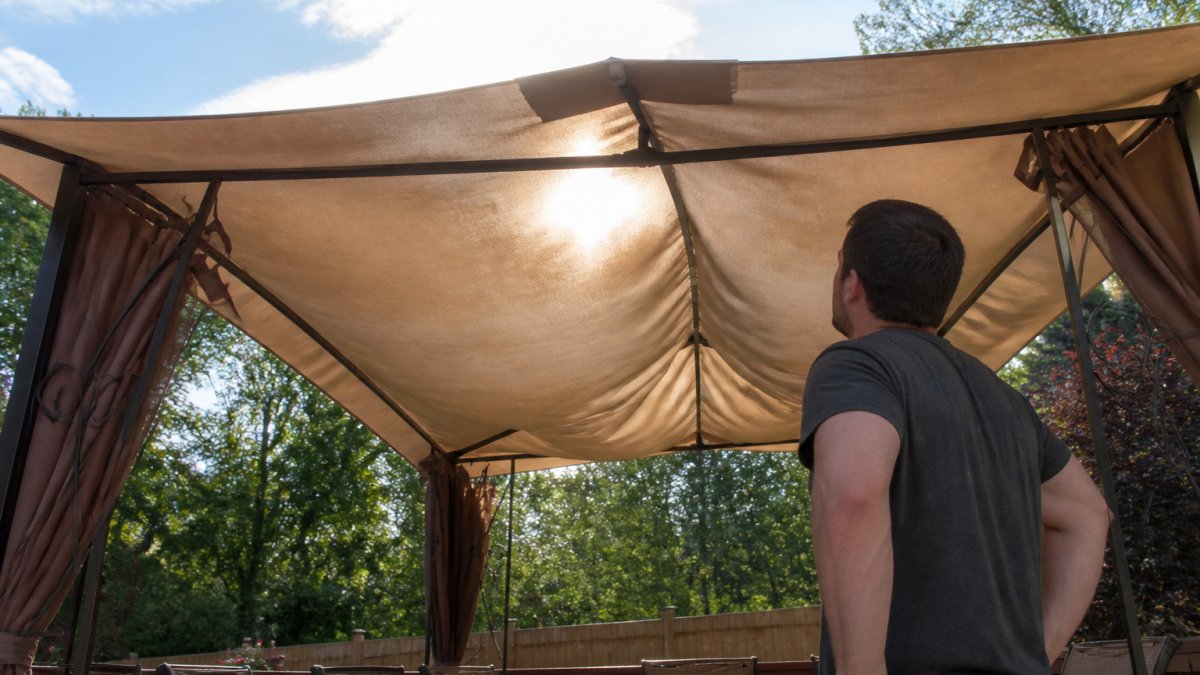
Start by treating the sag as a diagnosis, not a mystery. Work through the four checks below in order. Each check tells you whether to stop and fix that issue or move to the next one.
Step 1: Check for Water Pooling in Low Spots
Look at the canopy after a rain or a sprinkler run. Water that collects in the middle is the most common reason a canopy droops.
- Pooled water adds weight fast, and fabric stretches under that load
- Low spots form where the canopy has settled unevenly
- Dark, damp patches often show exactly where the water sits
If water stays in the sag, consider drainage fixes. If the water runs off but the sag remains, move to Step 2.
Step 2: Inspect Canopy Straps and Fabric Tension
Next, check the straps and the fabric. Loose straps are a frequent cause of canopy sag, especially in the middle where the fabric hangs longest.
- Pull each strap by hand and note any slack
- Look for fabric that puckers or bunches near the corners
- Check whether the canopy shifts when you push on the center
If the fabric moves freely, tension is the issue. Tightening comes next. If the straps are already tight and the fabric still sags, the problem may be incorrect assembly or a stretched canopy.
Step 3: Verify Correct Assembly and Canopy Fit
A canopy that was installed incorrectly or is the wrong size for the frame will sag in the middle even when the straps are tight. Check these points:
- Confirm the canopy is the correct model for your frame. A canopy that is too large will pool water; one that is too small will pull at the corners and leave the center loose.
- Check that the canopy is centered on the frame and that all attachment points are used.
- Look for twisted or crossed straps that prevent even tension.
- Review the assembly instructions for your specific gazebo model to confirm the canopy routing.
If the canopy is the correct model and installed correctly, move to Step 4.
Step 4: Look at the Frame and Roof Structure
Finally, inspect the frame. A bent or cracked frame can pull the canopy out of shape even when the fabric is fine.
- Sight down each rafter to spot bends
- Check joints and connectors for looseness or cracks
- Look for rust on metal parts, which can weaken the frame over time
If you find damage here, address it before adjusting the canopy. Otherwise, the sag will return.
How to Tighten a Gazebo Canopy Safely
Tightening usually fixes a sag that comes from loose fabric. Here is a safe way to do it.
- Lower the canopy to a comfortable working height and have a helper steady the frame.
- Loosen each strap slightly before adjusting, so you do not stress the fabric.
- Tighten the straps evenly, working from corner to corner in a crisscross pattern.
- Stop when the fabric is taut and the center rises back into shape.
Avoid over-tightening. Fabric pulled too hard can tear at the seams or stress the frame joints. If the canopy still dips after tightening, the fabric may be stretched beyond repair. Guide ropes can also help hold the shape, especially in windy areas.
Sunjoy Khaki Replacement Canopy For tini 3-Tiered Soft Top Gazebo (13x13 FT) →
How to Dry and Remove Pooled Water From a Gazebo Canopy
Standing water can make a sag worse. Address it when you see it.
- Use a soft broom or a leaf blower on low to push water toward the edges.
- Lift one corner slightly to let water drain off, then lower it back down.
- Wipe up any remaining moisture with a dry towel.
Do this on a dry, calm day when possible. Never climb onto the frame to reach the middle, since the structure may not hold your weight. Dry the fabric fully before storing the canopy to prevent mildew.
Fixing Gazebo Frame Damage Before It Worsens
A weak frame can pull the canopy out of shape.
- Bent rafters: Replace the part rather than forcing it straight.
- Loose joints: Tighten fasteners and check for worn connectors.
- Rust: Sand off loose rust, then apply a metal primer and paint. For a full walkthrough of rust removal, see How Do You Remove Rust From a Gazebo Frame?.
Watch out: do not weld or drill into a frame you are unsure about. Structural changes can void the frame's strength. For a bent or cracked frame part, a direct replacement is usually safer.
How to Prevent Water Pooling on a Gazebo Canopy
A few habits may help keep the canopy taut through rainy seasons.
- Tighten the straps at the start of each season.
- Keep the canopy free of leaves, debris, and snow.
- Check for low spots after each heavy storm.
- Store the canopy dry during the off-season.
Regular checks can help you notice small sags.
Deciding Whether to Repair or Replace Your Gazebo Canopy
Once you have diagnosed the sag, the next question is whether to fix the canopy you have or replace it. Use the checklist below to decide.
Repair If:
- The fabric is stretched but intact, with no tears or holes
- The seams are secure and not pulling apart
- The frame is sound, with no bends, cracks, or heavy rust
- The canopy still fits the frame correctly and the sag improves with proper tensioning
In these cases, tightening the straps, adjusting the canopy, or adding guide ropes may restore the shape. Small fabric repairs, such as patching a pinhole, can extend the life of the canopy.
Replace If:
- The fabric has tears, holes, or thin spots that let water through
- Seams are failing or stitching is pulling out
- The fabric is permanently stretched and will not hold tension even after adjustment
- The canopy no longer fits the frame due to shrinkage or frame damage
- The frame is bent, cracked, or heavily rusted in a way that cannot be safely repaired
A matching replacement top is an option when the fabric is failing but the frame is still solid.
Matching a Replacement Canopy to Your Frame
The Sunjoy Khaki Replacement Canopy For tini 3-Tiered Soft Top Gazebo (13x13 FT) is designed only for that specific model, so confirm your frame before buying. Shoppers with a Lowe's gazebo can also look at the Replacement Premium Heavy Duty Canopy Top 4134949 for Lowe's 10' x 12' Gazebo, which is listed for one model only. Check the model number against your frame first, since a canopy that does not match will not fit.
If you are unsure of your model, send a photo of the frame to Gazebo Parts Direct for fitment assistance.
Frequently Asked Questions
How do I stop my gazebo canopy from sagging in the middle?
Start by clearing any pooled water and tightening the canopy straps evenly around the frame. Work from one corner to the opposite corner so tension stays balanced. If the sag returns after a rain, the canopy may be stretched or the frame may be out of square. A replacement canopy is an option if yours has stretched permanently.
Can a loose gazebo canopy cause it to sag?
Yes. Check each strap for slack and tighten them in small, even increments.
Can a bent gazebo frame make the canopy sag?
Measure the diagonals of the frame: if they differ noticeably, one section is racked.
How do I know which replacement canopy fits my gazebo?
Match the canopy to the exact model number. Canopies are built for specific frame sizes and designs, so a canopy for a similar-looking gazebo may not fit. If you cannot find the model number, contact Gazebo Parts Direct for fitment assistance.
