

Table of Contents
- Why Allen and Roth Canopy Replacement Is Easier Than Replacing the Gazebo
- How to Measure Your Gazebo for a Replacement Canopy
- Fabric Durability Comparison: Polyester vs. Ripstop vs. Double-Tiered Tops
- How to Install a Gazebo Replacement Canopy Without Damaging the Frame
- Best Practices for Gazebo Canopy Maintenance and Seasonal Care
- DIY Repair vs. Full Canopy Replacement: Which Makes Sense?
- Warranty, Fitment Help, and What to Expect From a Canopy Replacement Order
- Conclusion: Restoring Your Allen and Roth Gazebo for 2026
- Frequently Asked Questions
Last Updated: October 2, 2026
Why Allen and Roth Canopy Replacement Is Easier Than Replacing the Gazebo
Replacing just the canopy on an Allen and Roth gazebo costs a fraction of buying a whole new structure, and it takes an afternoon instead of a weekend. The frame, posts, and footings are almost always still sound. The fabric on top is what fails first. This guide from Gazebo Parts Direct walks through measuring, fitment, installation, and warranty questions so you order the right top the first time.
A common mistake is assuming a worn canopy means the gazebo is finished. It rarely is. Sun exposure breaks down fabric long before steel or aluminum gives out, which is why canopy replacement is the practical fix for most Allen and Roth owners. The U.S. Consumer Product Safety Commission guidance on outdoor product safety is worth reviewing before you reinstall anything on a load-bearing frame.
Below, we cover the exact measuring steps, installation without frame damage, and how to tell a repair from a full replacement.
How to Measure Your Gazebo for a Replacement Canopy
Measure your gazebo across the top frame from outer edge to outer edge, then measure the depth the same way, and record both numbers in inches before you shop.
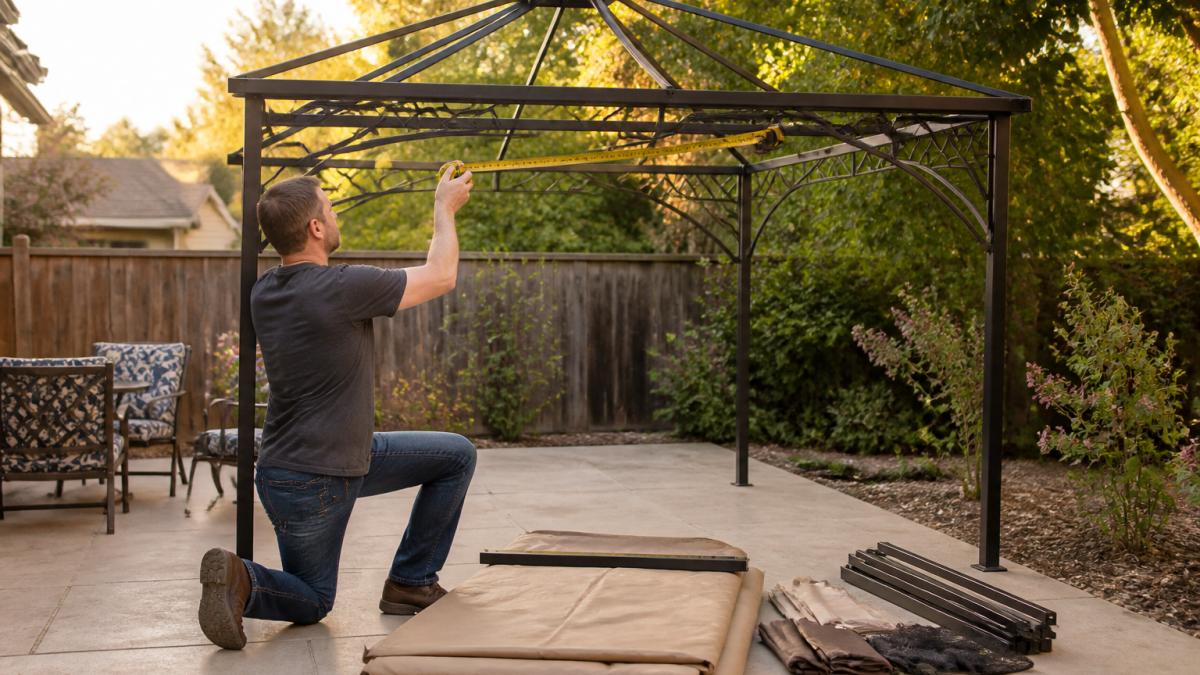
Follow these steps:
- Remove the old canopy and any debris from the top rails.
- Measure the width across the frame at its widest point.
- Measure the depth front to back at the same height.
- Measure the height of the frame's peak if your model has a raised center.
- Note the number of ribs and their attachment style.
- Photograph the frame corners and any model stickers.
Model numbers are often printed on a sticker under the frame rail or inside a leg. If yours is gone, the rib count and corner bracket shape usually identify the model family.
Fabric Durability Comparison: Polyester vs. Ripstop vs. Double-Tiered Tops
The number that matters most on a spec sheet is denier, abbreviated D.
| Fabric Type | Typical Denier | Durability | Best For | Trade-Off |
|---|---|---|---|---|
| Standard polyester | 300D | Moderate | Mild climates, budget orders, low wind | Fades and thins faster in direct sun |
| Heavy polyester | 500D | High | Open yards with steady wind | Heavier, stiffer to seat on the frame |
| Ripstop polyester | 300D-500D with grid | High | Storm-prone or exposed yards | Higher cost per unit |
| Double-tiered top | Varies by maker | High | Hot climates needing airflow | More complex installation, more seams |
Denier is not the whole story. The coating on the back of the fabric is what actually sheds water, and most canopies use a polyurethane or PVC backing.
Ripstop earns its price in exposed yards.
Double-tiered tops solve a different problem. By separating the roof into an upper and lower section, they let heat escape instead of trapping it under a single flat panel.
Look for two labels on any replacement canopy you consider. A UV protection rating tells you how much ultraviolet light the fabric blocks, and CPAI-84 fire retardant compliance is a widely referenced standard for outdoor fabric that many jurisdictions expect. If a listing shows neither, ask the seller before you order.
How to Install a Gazebo Replacement Canopy Without Damaging the Frame
Install the new canopy on a calm day with at least two people, working from the corners inward, and never force a seam over a rib.
Work in this order:
- Lay the canopy over the frame and align the corner pockets first.
- Attach the center hub or peak connection before the outer edges.
- Secure each corner, then work along the rails.
- Reattach any side netting or curtains after the top is fully seated.
- Check that all air vents sit flat and drain properly.
If a pocket will not reach, stop and recheck your measurements. A canopy that is one size off will never seat correctly, and pulling harder only damages the frame structure.
Best Practices for Gazebo Canopy Maintenance and Seasonal Care
Most replacement canopies fail from neglect between seasons, not from the fabric wearing out on its own.
Start with a cleaning routine that protects the coating instead of stripping it.
A seasonal maintenance calendar keeps the work predictable:
- Spring, before first use: Unfold the canopy, inspect for winter damage, check every seam and grommet, and wash off any mildew or tree sap. Confirm the frame has no rust or bent ribs before you seat the top.
- Early summer: Brush off pollen and debris, check that air vents and drainage paths are clear, and tighten any loose hardware on the frame.
- Late summer: Wash again if you see dirt buildup, and inspect the fabric for thinning or small tears before storm season.
- Fall, before storms: Remove or secure the canopy if high winds are forecast, and check that the corner pockets are not stretched.
- Late fall, before winter: Take the canopy down, wash and dry it completely, and store it flat or loosely folded in a dry, rodent-free space.
Storage conditions matter as much as cleaning. A canopy stored damp in a sealed bin grows mildew, which eats the coating and leaves permanent stains.
Check the drainage paths and air vents every time you clean.
DIY Repair vs. Full Canopy Replacement: Which Makes Sense?
Repair makes sense for small tears, a few missing grommets, or a single loose seam. Full replacement is the better call when the fabric is faded, brittle, or torn in multiple places, because patched fabric keeps failing at the next weak point.
Use this decision framework:
- Small tear under a few inches: patch kit, low cost, short-term fix.
- Frayed seams or stretched pockets: replacement is usually cheaper than repeated repairs.
- Faded or chalky fabric: replace, since UV damage cannot be reversed.
- Bent frame with intact fabric: repair the frame, keep the canopy.
Most owners who patch a canopy twice end up replacing it anyway within a season. If the fabric is more than a few years old and showing wear at the seams, put the money toward a new top.
Warranty, Fitment Help, and What to Expect From a Canopy Replacement Order
Warranty coverage on replacement canopies typically covers manufacturing defects, not storm damage or normal fading, so read the terms before you buy. Fitment help is the part most buyers overlook, and it is what prevents the wrong-size order.
When you order, confirm these details:
- Exact width and depth in inches
- Model number or clear photos of the frame
- Fabric type and color
- Whether side netting or curtains are included
- Return policy if the fit is wrong
If you cannot find your model number, send photos of the frame corners, rib count, and any stickers to the seller's support team.
Conclusion: Restoring Your Allen and Roth Gazebo for 2026
A worn canopy does not mean a new gazebo. Measure the frame carefully and install it without forcing the seams. That approach restores the structure for a fraction of replacement cost.
When you are ready to order, Gazebo Parts Direct makes it simple. We offer fitment help to confirm the right model, an extensive inventory of canopies, curtains, screens, and frame parts, and fast shipping so your gazebo is ready before the season starts. Add to cart and get the exact canopy replacement your Allen and Roth frame needs.
Frequently Asked Questions
How do I find the model number for my Allen and Roth gazebo?
Check the inside of one leg near the base, the underside of the top frame, or the original assembly manual. Allen and Roth model numbers usually start with a letter and several digits. If the sticker has worn off, take clear photos of the frame joints, roof shape, and overall dimensions, then send them to a fitment team that can match your gazebo to the correct replacement canopy.
Are Allen and Roth replacement canopies universal?
No. Allen and Roth has sold dozens of gazebo models through Lowe's over the years, and canopy dimensions, corner shapes, and attachment points vary between them. A canopy replacement made for one model often will not fit another, even if the gazebos look similar. Always confirm the model number or measure the top frame before ordering.
What should I measure before buying a replacement canopy?
Measure the outside edge of the top frame from corner to corner on both sides, then measure the height of the frame from the ground to the lowest roof edge. Also note the number of legs, the roof style (flat, tiered, or double-tiered), and whether the frame uses hooks, pockets, or velcro straps to hold the canopy. These details determine fitment more reliably than the gazebo's name.
Does the manufacturer sell replacement canopies directly?
Allen and Roth gazebos are sold through Lowe's, and the brand does not operate its own direct-to-consumer parts store. Replacement canopies for discontinued models are often unavailable through retail channels. Specialty suppliers that stock aftermarket tops for major big-box gazebo brands are usually the fastest way to find a canopy that matches your frame.
How do I know a replacement canopy will last longer than the one that failed?
Look at fabric density, coating type, and UV protection rather than price alone. Canopies with tightly woven polyester or ripstop fabric and a water-repellent coating resist fading and tearing better than thin single-layer tops. A CPAI-84 fire retardant rating and reinforced attachment points are also signs of a heavier-duty build. Ask about warranty terms before ordering.