

Quick Summary
The best gazebo canopy color depends mainly on your climate and how hot your backyard gets. Light shades such as white, tan and light grey reflect more sunlight and keep the space beneath cooler, while dark colors such as black absorb heat, making mid-tone neutrals a safe all-round choice.
- Light colors such as white, tan and light grey reflect more sunlight and keep the area cooler.
- Black absorbs heat and usually feels the hottest underneath on sunny days.
- Mid-tone neutrals like tan, sage or slate hide water marks and fading better.
- Look for a listed UPF 50+ rating on the specific product for UV protection.
- Find your model number on the frame label to confirm a replacement canopy fits.
Table of Contents
- How to Choose the Best Gazebo Canopy Color for Your Backyard
- Why Gazebo Canopy Color Matters More Than Most Buyers Expect
- How Canopy Color Affects Heat Absorption and Shade Comfort
- UV Protection Ratings for Outdoor Fabrics and How Color Changes Them
- Matching Canopy Color to Your Outdoor Decor and Home Exterior
- Light vs. Dark Canopies: Fading, Dirt and Maintenance by Color
- Best Gazebo for Wind and Rain: Matching Fabric and Color to Your Climate
- Replacing a Canopy in Your Current Color: Finding the Right Fit for Allen and Roth Models
- Frequently Asked Questions
How to Choose the Best Gazebo Canopy Color for Your Backyard
Last Updated: November 4, 2026
Why Gazebo Canopy Color Matters More Than Most Buyers Expect
Choosing a gazebo canopy color is more than a cosmetic decision. Customers often ask which color will hold up, keep the space comfortable, and still match the house? The color you pick affects how much heat the shade gives off, how quickly the fabric shows dirt and fading, and how the whole backyard looks from the kitchen window. Gazebo color is part of the functional choice, not just a finishing touch.
A gazebo canopy is a fabric roof that filters sunlight over a patio, deck or lawn. Its color determines how much light and heat it reflects or absorbs, which in turn shapes the temperature underneath. Most buyers focus on frame size and fabric weight and treat color as an afterthought, then find that a dark canopy turns the seating area into an oven by mid-afternoon.
Our guide walks through heat absorption, UV protection, matching your home's exterior, maintenance by color, and how to choose for your climate. We also cover replacing a canopy in the color you already have, which is one of the most common requests we handle.
How Canopy Color Affects Heat Absorption and Shade Comfort
Canopy color changes comfort under the shade because of how the fabric handles the sun's energy. A light-colored canopy reflects a larger share of incoming sunlight back into the sky, so less heat builds up in the fabric and radiates down onto the seating area. A dark canopy absorbs more of that energy, warms up itself, and then releases heat downward, which is why a black or navy roof can feel noticeably hotter underneath even when the fabric blocks the same amount of direct sun. The shade is still shade; the difference is how much stored heat the roof sheds into it.
The practical ranking for a hot-summer backyard runs roughly white and light grey at the coolest end, then tan and sand, then mid-tones such as sage, slate and muted red, with black, navy and deep green at the warmest. That order is a rule of thumb, not a spec sheet, fabric weight, weave density and any reflective coating can shift it. A tightly woven light fabric with a light-colored underside will usually outperform a thin dark one on comfort, and a canopy with a white or silver underside reflects heat back up before it reaches the people below.
Climate should drive the choice more than fashion. In a hot, sunny backyard, a tan, grey or white canopy is usually the more comfortable pick and keeps the space usable through the afternoon. Where winters are long and the canopy is mainly a rain roof, a deeper tone can suit you better because heat gain is not the problem. Think about when you will actually sit under the canopy, a roof that is pleasant at 9 a.m. can be punishing at 3 p.m. if it is dark.
Watch out: color is not the only variable. A dark canopy on a poorly ventilated frame with closed sides will trap heat far more than the same fabric on an open structure with good airflow, so do not assume a light color alone will fix a hot spot.
UV Protection Ratings for Outdoor Fabrics and How Color Changes Them
UV protection is the feature most buyers ask about after color. Several replacement canopies we stock carry a UPF 50+ rating, which is the standard measure of how much ultraviolet radiation a fabric blocks.
Always check the listed rating for the specific product you are buying, rather than assuming a shade is more protective than another. You can compare fabric UV ratings and durability in our full guide to weather-resistant gazebo fabrics.
Matching Canopy Color to Your Outdoor Decor and Home Exterior
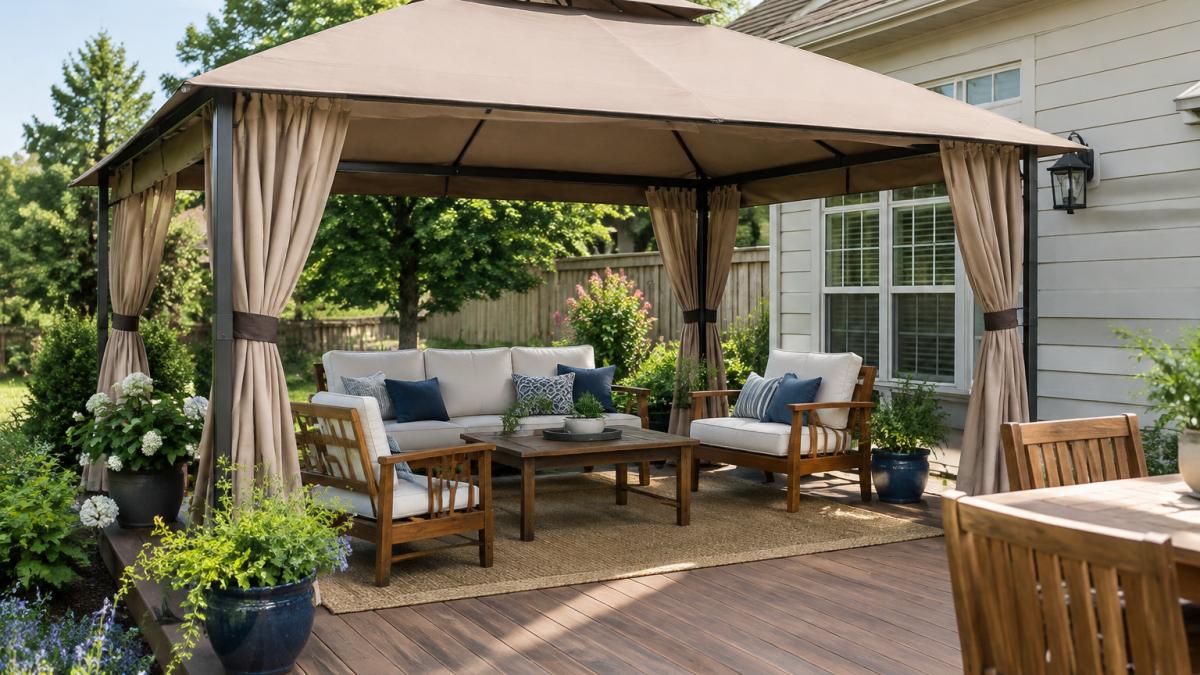
Start with what is already in the yard. Neutral tones such as tan, grey and black blend into most outdoor décor and stay in style for years. Richer shades of red, green and blue make a bolder statement and suit homes with bright or traditional exteriors.
A simple test: hold a fabric swatch against your siding, deck stain and patio furniture in daylight. If the canopy will sit above all three, pick the shade that looks calm next to them. Avoid colors that clash with the frame finish, since the canopy and frame will be seen together every day.
Big Lots Windsor Replacement Canopy for L-GZ717PST-C The Windsor Gazebo →
Light vs. Dark Canopies: Fading, Dirt and Maintenance by Color
Light and dark canopies fail in different ways, and knowing which failure your color is prone to lets you plan maintenance instead of reacting to stains. Light canopies, white, cream, sand, light grey, show dirt, pollen, bird droppings and water spots sooner, so they need more frequent cleaning, but they also hide sun-fading well because there is less dye to lose.
Mid-tones are the compromise most buyers land on. A tan, sage or slate canopy hides water marks better than bright white and shows fading less than black, which is why they hold up visually across a wide range of backyards. If you want a single color that ages gracefully with minimal fuss, a mid-tone neutral is usually the safest bet.
When a section does wear out, a matching replacement canopy is often more practical than replacing the whole structure, and buying the same color again keeps the gazebo looking consistent.
Best Gazebo for Wind and Rain: Matching Fabric and Color to Your Climate
In windy or rainy areas, fabric weight, waterproofing and fit matter more than color alone.
Replacing a Canopy in Your Current Color: Finding the Right Fit for Allen and Roth Models
Many customers want to keep the color they already have so the gazebo still looks right. Start by locating your model number, which is usually printed on a label or the frame's packaging. If you cannot find it, measure the canopy and frame and compare them with the product listings.
Measure the frame's width, length and height, and note the number of corners or sides. Our guide on how to measure a gazebo for a replacement canopy explains exactly where to take each measurement. Fitment depends on the exact model, so confirm the listing says it fits your gazebo before ordering. Our team offers fitment assistance to help you match the right canopy.
Among the replacement canopies we offer, the Big Lots Windsor Replacement Canopy for L-GZ717PST-C (Riplock 350, True Navy, $229.63) is a deep, neutral option, while the Big Lots Windsor Replacement 10x12 Canopy for L-GZ717PST-C (Riplock 350, Red, $199.97) offers a bolder color. Both are UPF 50+ and water resistant, though neither includes the metal structure or mosquito netting.
| Canopy | Color | Price | Best For |
|---|---|---|---|
| Windsor Replacement, L-GZ717PST-C | True Navy | $229.63 | Deep, neutral backyards |
| Windsor Replacement, L-GZ717PST-C | Red | $199.97 | Bold, traditional styles |
| Shadow Creek Replacement, L-GZ1140PST-G | Gray and Black | $239.62 | Soft-top gray gazebos |
Ready to choose? Browse our full range of replacement gazebo canopies, or contact our team with your model number and we will confirm the right fit before you order.
Frequently Asked Questions
What is the best color for a gazebo canopy?
There is no single best color, but light and neutral shades are usually the practical starting point for hot, sunny backyards. Light-colored canopies reflect more heat, which can make the shaded area feel cooler. Darker colors absorb more heat, which some owners prefer in cooler climates. Black filters the most sunlight, but it also absorbs the most heat, so it is often the weakest choice for keeping the area underneath cool. Match the color to your climate and the look of your yard.
Is a white or black canopy better?
A white or light canopy is generally better for keeping the space under it cool, because it reflects heat. A black canopy blocks the most sun but absorbs heat, which can make the shaded area warmer. Choose white or a light neutral if comfort in direct sun is your priority. Choose a darker shade if you live somewhere cool and want the canopy to add warmth.
Do lighter colored canopies show dirt more easily than darker ones?
Lighter canopies tend to show dirt, pollen and water spots more visibly than darker fabrics, which hide surface soil better.
Will a replacement canopy fit my Allen and Roth gazebo?
Fit depends on the exact model and frame dimensions, so confirm the model number before ordering. Gazebo Parts Direct offers fitment assistance to help match a replacement canopy to your specific Allen and Roth model. Measure your frame and compare the listed dimensions before you buy to avoid ordering a canopy that is too small.
