

Table of Contents
- What Makes Gazebo Fabric Weather Resistant
- UV-Resistant Gazebo Canopy Fabric: Protection Against Sun Damage
- Waterproof Gazebo Canopy Replacement: Rain and Moisture Protection
- Polyester and Riplock Technology: Fabric Durability Standards
- Replacement Gazebo Canopy Measurements: Getting the Right Fit
- Gazebo Canopy Care and Maintenance: Extending Fabric Lifespan
- Soft-Top vs. Hardtop Gazebos: Weather Performance Trade-Offs
- Wind Resistance and Stability in Severe Weather
- Frequently Asked Questions
Last Updated: October 21, 2026
What Makes Gazebo Fabric Weather Resistant
A weather resistant gazebo fabric combines protection against sun, rain, wind, and temperature extremes through specific material choices, construction methods, and coatings working together.
Three elements separate a canopy that lasts two seasons from one that survives five or more: fabric weight and fiber type, protective treatments, and construction that prevents small damage from becoming catastrophic failure.
Replacement canopies differ in how well the fabric resists three threats: UV rays that degrade synthetic fibers, water pooling and rain penetration that cause mildew and structural stress, and wind and physical stress that create tears without built-in tear resistance.

The most durable canopies use polyester: its fibers resist moisture absorption better than natural fibers, hold up in extreme heat, and accept protective coatings more effectively.
UV-Resistant Gazebo Canopy Fabric: Protection Against Sun Damage
UV protection is non-negotiable if your gazebo sits in direct sunlight for hours daily. Without it, fabric degrades rapidly, colors fade within months, and the material becomes brittle and prone to tearing.
The most effective weather resistant gazebo fabric includes UV-absorbing compounds woven into or applied to polyester fibers, intercepting ultraviolet radiation before it breaks down the polymer chains that give the fabric strength.
How UPF Ratings Work
UPF (Ultraviolet Protection Factor) ratings measure how effectively a fabric blocks ultraviolet radiation. This is the standard you should expect from any replacement canopy worth purchasing.

A UPF 50+ canopy allows only 1/50th of UV radiation through, so skin that burns in 10 minutes unprotected would take roughly 500 minutes under the fabric.
Most quality replacement canopies carry UPF 50+ protection as standard, a tested specification rather than marketing language.
Fade Resistance in High-Heat Climates
Fade resistance and UV protection are distinct: a fabric can block UV rays effectively while still showing color shift from heat stress alone.
Solution-dyed acrylic resists fading better than surface-dyed alternatives because color is integrated into the fiber.
The practical difference: a standard replacement canopy may show noticeable color shift after three years in a hot climate, while a fade-resistant canopy holds its original color for five to seven years under identical conditions.
Waterproof Gazebo Canopy Replacement: Rain and Moisture Protection
Water protection comes in two forms: water-resistant coatings that repel light rain, and true waterproof construction that prevents penetration during heavy downpours. Most replacement canopies offer one but not the other.
A water-resistant coating sheds light rain and morning dew without absorbing moisture, sufficient for occasional showers. True waterproofing, via membrane backing or sealed seams, prevents water from passing through entirely, even under sustained rainfall or pooling.
Water-Resistant Coatings vs. True Waterproofing
Under heavy or prolonged rain, coated fabrics eventually allow some penetration, and the coating wears away over time, especially at high-friction areas and folds.
True waterproofing requires a sealed membrane backing or seam sealing with specialized tape or sealant on every stitched joint.
In practice, a water-resistant canopy keeps the frame dry and prevents mildew but lets some water reach the fabric's underside.
Drainage Design and Pooling Prevention
Even waterproof fabrics fail if water pools on top. Standing water stresses the fabric and frame, creating sagging areas where water collects deeper, accelerating degradation and potentially causing structural failure.
The best weather resistant gazebo fabric design includes a peaked or vaulted roof that sheds water toward the edges.
Polyester and Riplock Technology: Fabric Durability Standards
Polyester dominates the replacement canopy market for its balance of durability, weather resistance, and cost. Unlike cotton or canvas, it doesn't absorb moisture, doesn't rot, and holds up across a wide temperature range.
The most important durability specification for polyester canopies is denier, a measure of fiber thickness and fabric weight. Higher denier means thicker, stronger fabric that resists tearing and lasts longer under stress.
350 Denier Polyester Explained
350 denier polyester is the industry standard for replacement gazebo canopies because it balances strength and handling: thick enough to resist tearing and punctures from branches or weather stress, yet light enough to install without specialized equipment.

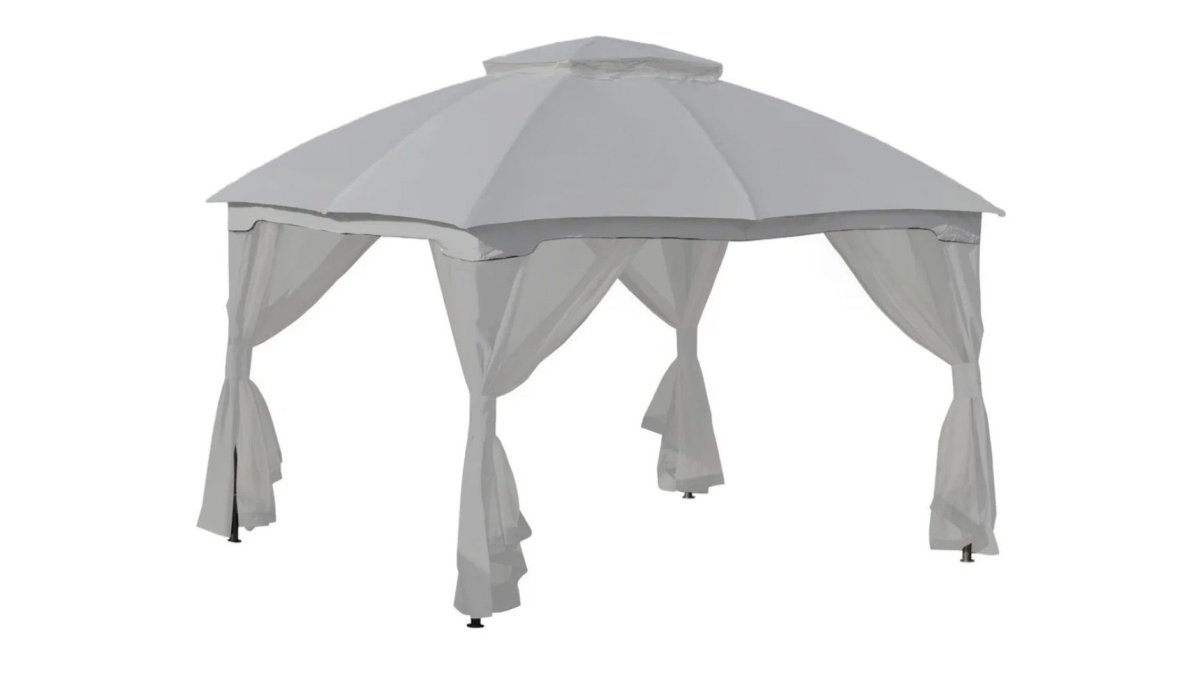
The Replacement Canopy 9'11" x 9' x 11" Top Cover Compatible with The Lowes Gazebo uses 350 denier polyester with Riplock technology, priced at $189.63.
Riplock Gridlines and Tear Resistance
Riplock technology is a construction method, not a material, and one of the most important durability features in modern replacement canopies.
When a tear occurs in Riplock fabric, the gridlines stop it from spreading.
This feature can extend a canopy's lifespan by preventing catastrophic failures: a torn Riplock section can be patched, while without Riplock a tear often means replacing the entire canopy.
Many replacement canopies now include double Riplock technology, adding gridlines in both directions with reinforced intersections for stronger tear resistance.
Replacement Gazebo Canopy Measurements: Getting the Right Fit
A weather resistant gazebo fabric means nothing if it doesn't fit your frame. Incorrect measurements are the leading cause of returns: a canopy 2-3 inches too small won't stretch to fit, and one too large will sag and pool water.
Accurate measurements require your gazebo's model number, frame dimensions, and attachment style, a common struggle with older or discontinued gazebos.
How to Measure Your Gazebo Frame
Next, measure the height from the ground to the roof's highest point at the center, or to the frame edge where the canopy attaches on flat roofs.
Replacement Canopy 9’11” x9’x11” Top Cover Compatible with The Lowes Gazebo →
Take measurements at multiple points, front, back, left, and right, since frames can shift or settle unevenly and variations can indicate structural issues affecting fit.
The most overlooked critical measurement is overhang or eave depth, how far the canopy extends beyond the frame edge.
Model Number Verification and Fitment
Before purchasing any replacement canopy, locate your gazebo's model number on the manufacturer's label, usually near a leg or under the roof structure.
Model numbers encode exact specifications, frame dimensions, roof style, attachment method, and overhang design. A canopy for one model may not fit another from the same manufacturer if the frame geometry differs even slightly.
Fitment assistance begins with your model number: we verify compatibility against our database and confirm the replacement canopy matches your gazebo's dimensions and attachment points.
If you can't locate a model number, send clear photos from multiple angles, including close-ups of frame attachment points and any manufacturer markings.
Gazebo Canopy Care and Maintenance: Extending Fabric Lifespan
A weather resistant gazebo fabric requires ongoing care to maintain its protective properties. Neglect accelerates degradation: a canopy that lasts five years with proper maintenance might fail in three without it.
The most important maintenance tasks are seasonal: cleaning before storage, inspecting for damage, and protecting the fabric off-season.
Cleaning and Storage Best Practices
Clean your canopy twice per year, at the start of summer and before winter storage, using a soft brush or low-pressure water to remove dirt, pollen, and debris.
For stubborn stains or mildew, use a mild soap solution (one part white vinegar to three parts water) and a soft cloth, scrubbing gently and rinsing thoroughly.
Before winter storage, inspect for tears, holes, or damaged seams.
Store your canopy in a cool, dry location, ideally indoors or climate-controlled.
Repair and Seasonal Preparation
Minor tears and small holes can be repaired with polyester patch kits from most outdoor retailers.
Larger tears, damaged seams, or worn-away coating typically require professional repair or replacement, since standard patch kits often fail when the underlying damage is more extensive than visible.
Before each season, inspect all attachment points where the canopy connects to the frame.
Check the frame for rust, bent legs, or loose joints, since a damaged frame stresses the canopy and causes uneven stretching or tearing.
Soft-Top vs. Hardtop Gazebos: Weather Performance Trade-Offs
The choice between soft-top and hardtop gazebos determines which weather resistant gazebo fabric options are relevant to you.
Soft-top gazebos use fabric canopies on a metal frame.
Hardtop gazebos use rigid metal or polycarbonate roofs for superior weather protection and durability, but they're heavier, more expensive, and permanent.
For budget-conscious homeowners or those who want flexibility, soft-top gazebos with high-quality replacement canopies offer excellent value.
Wind Resistance and Stability in Severe Weather
Wind is the most destructive force most gazebos face.
Most residential gazebos are designed for wind up to 25-35 mph, where a properly installed canopy with secure attachment points holds.
When high winds are forecast, consider removing your canopy entirely to eliminate wind load on the frame and prevent damage.
Gazebo Parts Direct specializes in matching replacement canopies to your specific gazebo model, ensuring correct fitment and optimal weather performance.
| Fabric Feature | Impact on Durability | Maintenance Required | Lifespan Extension |
|---|---|---|---|
| 350 Denier Polyester | Resists tearing and punctures | Seasonal cleaning | 3-5 years |
| Riplock Technology | Stops tears from spreading | Inspect for damage | +2-3 years |
| UPF 50+ Protection | Blocks 98% of UV rays | None (built-in) | +1-2 years |
| Water-Resistant Coating | Sheds light rain, prevents mildew | Clean before storage | +1 year |
| Proper Roof Design | Prevents water pooling | Verify fitment | +2-3 years |
Frequently Asked Questions
Which fabric is best for a weather-resistant gazebo canopy?
350 Denier polyester with Riplock technology is the industry standard for weather-resistant gazebo canopies. This combination provides UPF 50+ UV protection, water-resistant coating, and tear resistance through reinforced gridlines. The Riplock feature stops small rips from spreading, extending canopy lifespan. Most replacement canopies from major brands use this specification because it balances durability, cost, and all-weather performance.
How do I measure a gazebo for a replacement canopy?
Start by measuring the frame length and width (typically 8x8, 10x10, or 10x12 feet). Measure from the outer edge of the frame on opposite sides. Next, find your gazebo's model number on the frame or original documentation, this is critical for fitment. Different manufacturers use different attachment systems and roof designs, so matching the exact model ensures proper fit. If you cannot locate the model number, contact support with photos and measurements of your frame.
Are gazebos rainproof with weather-resistant fabric?
Weather-resistant fabric provides protection against light to moderate rain, but true gazebos are not fully rainproof. Water-resistant coatings repel water and help it drain off the canopy, but heavy downpours or wind-driven rain can still find seams or gaps. For maximum protection during storms, look for canopies with reinforced seams and proper drainage design. Always secure your gazebo to prevent wind from lifting the canopy during severe weather.
How can I make a gazebo canopy last longer?
Regular maintenance significantly extends canopy life. Clean the fabric every 3-6 months with mild soap and water to prevent mold and mildew. Store the canopy indoors during winter or cover it with a protective tarp. Inspect for small tears and repair them immediately using fabric patch kits, small tears become large ones if left unattended. Ensure proper drainage by checking that water runs off and does not pool. Secure the gazebo firmly to prevent wind stress on the fabric.
What is the difference between polyester and olefin gazebo canopy fabrics?
Polyester is the most common gazebo fabric and offers excellent UV resistance, water-repellency, and durability at a reasonable cost. It withstands repeated cleaning and maintains color well. Olefin is lighter and less expensive but degrades faster under intense UV exposure and is more prone to brittleness in extreme cold. For weather-resistant performance and long-term value, 350 Denier polyester with water-resistant coating outperforms olefin in most climates.
Can I leave a fabric gazebo canopy up in strong winds?
Most fabric gazebos are not designed to withstand winds above 30-40 mph safely. Strong winds can stress the frame, tear the fabric, or collapse the structure entirely. If severe weather is forecast, remove the canopy or secure it very tightly to the frame and ground. Use ground stakes or bolts to anchor the gazebo, and consider lowering or removing the canopy during hurricane-force winds. Always check your specific gazebo's wind rating in the manufacturer's instructions.